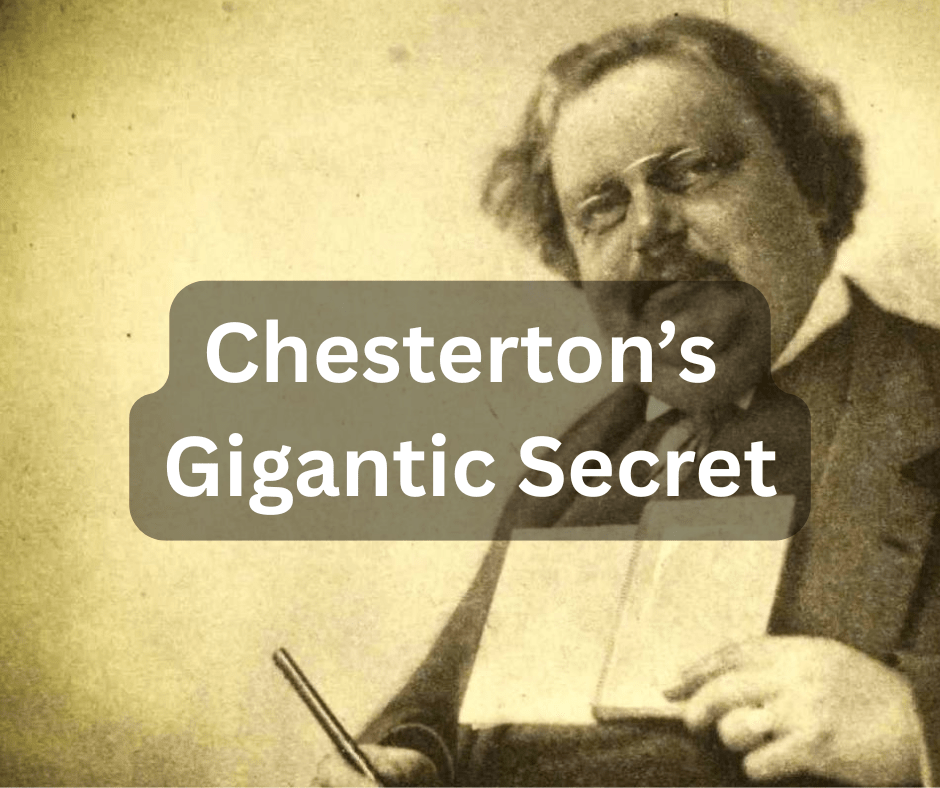
A dark enchantment hangs over our age and it smells like hopeless pessimism. This thick smog is trying to make us think everything is an accident, everything is boring, everything is dark and gloomy. But Chesterton breaks the spell with a laugh. And his laugh is contagious.
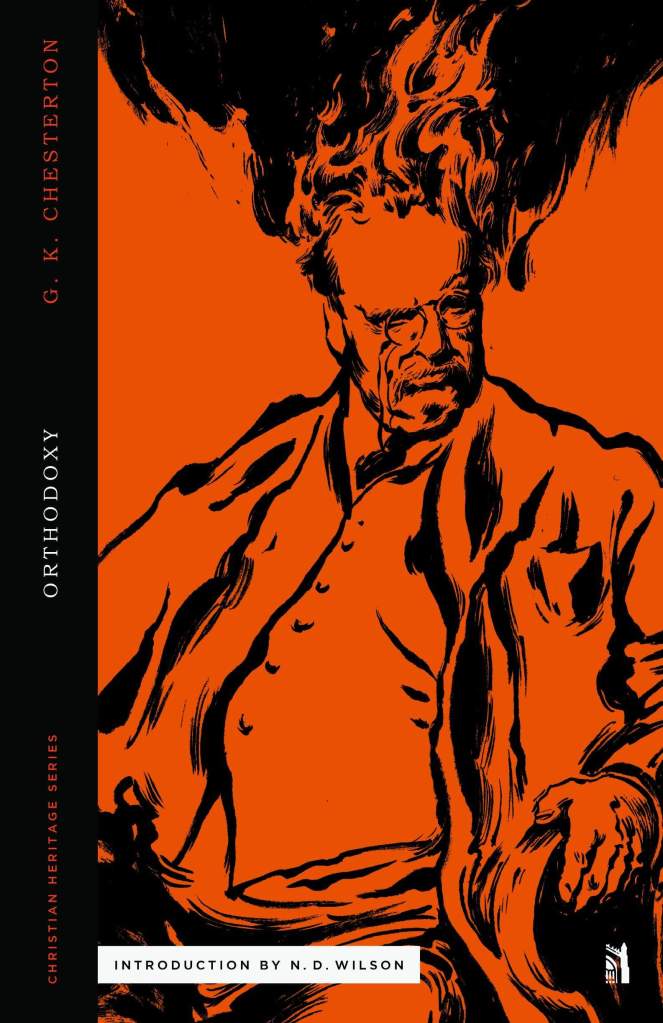
“Joy, which was the small publicity of the pagan, is the gigantic secret of the Christian.” -pg. 187, Orthodoxy
“Man is more himself, man is more manlike, when joy is the fundamental thing in him…” -pg. 186, Orthodoxy
“Pessimism is at best an emotional half-holiday; joy is the uproarious labour by which all things live.” -pg. 186, Orthodoxy
The primary reason Chesterton laughs is because he knows that God made the world. And then Chesterton laughs again because Jesus has recreated the world in his death and resurrection. These two realities–genesis and palingenesis, creation and recreation–change everything.
Creation means nothing is an accident but rather everything is personal and on purpose. That is, God loves this world and He has made it good. Creation reveals God. Because the world is on purpose, the world is not boring. The world is a highly crafted artifice for God’s glory and our good. This means there is nothing boring about life. This means hope and joy penetrate everything.
Chesterton’s laugh does not ignore that we have enemies to fight. He fully understands the direness of our situation. His life was dedicated to fighting for the truth.
He summed it up this way: “I now realize that we are trying to fight the whole world, to turn the tide of the whole time we live in, to resist everything that seems irresistible.”-G.K.’s Weekly, March 9, 1929
He also said, “The one perfect divine thing, the one glimpse of God’s paradise on earth, is to fight a losing battle–and not lose it.”-Time’s Abstract and Brief Chronicle, CW 11:63
And Jesus was the first one to fight the losing battle and not lose. Through the seeming defeat of the cross he defeated his enemies. The gospel is such an odd truth that when we understand it, it should make us laugh in astonishment. The innocent condemned as guilty and the guilty forgiven and set free. As 2 Corinthians 5:21 says: “For He made Him who knew no sin to be sin for us, that we might become the righteousness of God in Him.”
Chesterton says it this way: “Those underrate Christianity who say that it discovered mercy; any one might discover mercy. In fact everyone did. But to discover a plan for being merciful and also severe–that was to anticipate a strange need of human nature. For no one wants to be forgiven for a big sin as if it were a little one.”-pg. 115, Orthodoxy The truth is stranger than we think. In Jesus’ death, God deals with sin as the deeply horrifying evil that it is and at the same time he offers grace to us criminals. Only at the cross do we find justice dealing out its strongest blow and in the same stroke mercy gushes forth as the deep river of life.
Two Critiques
Speaking of being forgiven, Chesterton wasn’t perfect. He had his flaws. My two biggest criticisms of him is that he talks about the Church when he should talk about Scripture or God’s word. God’s word is the root of all our fun and freedom. So while he might be a little light on this light, he understands in his bones the joy of the gospel.
My other criticism of Chesterton is that Roman Catholicism, like materialistic evolution, is just another prison that keeps men from finding ultimate joy. The truly romantic adventure is found in the justification of God’s sovereign grace freely offered and freely received by faith. We don’t have to win our way there; the victory has already been won. The Gospel of Grace means we win before we ever get started which means we can laugh along the way.
The Key Lesson
The key lesson Chesterton teaches is the way we fight sin matters. The Joy of the Lord is our strength and so the weapon in our hands must be Joy. Joy and laughter are more effective in the fight than crankiness and frowns. I think this is one of the weaknesses of modern evangelicalism: we have been far too shrill and screechy. We need to imitate our heavenly Father and His Joy even as we face sin in our people and evil in the world. Chesterton is a great antidote to the shrill young men who see the great destruction in our land and are tempted to despair and anger.
At the end of Lord of the Rings, Sauron is nothing more than a dark smog driven away by the breeze. Laughter is the breeze that drives the wispy smoke away.
Two Takeaways
First, what we win men with is what we win them to. We win men with the joy of the gospel. Joy keeps the sour pessimism at bay. Two gospel truths held together: the depths of sin and the brightness of the gospel. You are worse than you think and God’s mercy is even greater than that.
Second, joy recognizes the work that needs to be done and loves it. Hebrews 12:2 says, “looking unto Jesus, the author and finisher of our faith, who for the joy that was set before Him endured the cross, despising the shame, and has sat down at the right hand of the throne of God.” We must imitate the good shepherd in our work. We must love the church in order for the church to become lovely.




 Jesse Sumpter